In 2026, newsletters are becoming the “quiet miracle of loyalty,” allowing media projects to turn casual visitors into a devoted community. To survive in the era of social media algorithms and AI search, modern editorial teams need to implement hybrid CMS architectures and a well-designed reader journey. In this article, we will examine an effective email marketing strategy: from deep audience segmentation by interests to configuring automated funnels and email cadence. You will learn how to use native tooling and GA4 events to track Core Web Vitals, and you will also be able to download a practical Newsletter Playbook with templates and UTM tagging for a quick start.
Newsletter as the First Step Toward the “Quiet Miracle of Loyalty”
In the era of social media and AI search dominance, the line between “empty” traffic and a loyal audience is becoming a matter of survival for editorial teams. We often speak about the “quiet miracle of loyalty” — the moment when a random passerby turns into a devoted reader. In 2026, it is the newsletter that becomes the first and most important step on this path, allowing modern media to transform a one-time visit into a lasting habit.
For this miracle to happen, it is not enough to simply collect email addresses. It is necessary to design a полноценный reader journey, introduce content consumption habits, and leverage the capabilities of hybrid CMS platforms.
In this section, we will examine how to turn the first click into a foundation for community:
Journey design: how to move a “passerby” from search into subscriber status and, ultimately, into a fan of the brand.
Technological foundation: choosing a CMS architecture in 2026 that ensures speed and seamless integration of native newsletter tools.
The battle for attention: how the right cadence and segmentation help win the fight for milliseconds of engagement in an overcrowded inbox.
A newsletter is not the end of the marketing funnel, but the beginning of a long journey where every segment, automation, and timely email brings us closer to building a genuine community.
Segmentation: Structuring the Audience for Personalization
In 2026, segmentation is a process of organizing the database that allows media projects to deliver content according to the specific interests of user groups. This approach ensures communication accuracy and helps build the reader journey from the first click to the formation of a sustainable community.
Levels of Data Organization
The audience distribution process is built on several key criteria:
Thematic clusters: Readers are distributed by interests based on the content they consume, marked with tags such as Fourth estate, AI builder, or Product.
User lifecycle: The strategy tracks the stage of interaction, distinguishing new subscribers from long-term community members in order to provide them with relevant onboarding scenarios or deeper content.
Consumption parameters: The audience is grouped by preferences in content volume, including short 8-minute overviews or detailed 17-minute guides.
Technological Support for Segmentation
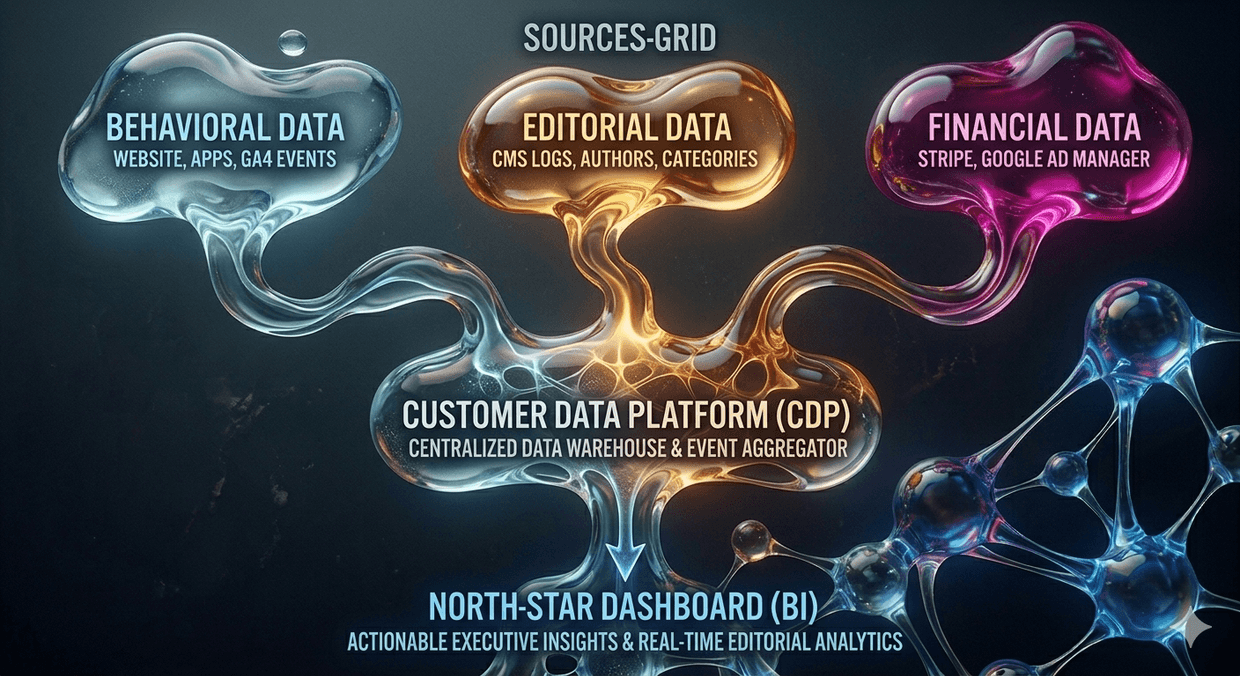
The use of hybrid CMS architectures in 2026 makes it possible to automate the collection of reader behavior data. This ensures synchronization between user actions on the site and their profile in the email service. When the segment structure relies on up-to-date data, the newsletter becomes a strategic tool for turning “passersby” into devoted readers.
Such database organization allows the editorial team to accurately plan email content, maintaining a stable level of engagement and satisfying the demands of different audience groups.
Cadence and Rhythm: Forming the Reading Habit
In 2026, newsletter cadence is viewed as a user journey design tool that helps integrate content into the audience’s daily schedule. Establishing a predictable rhythm of email delivery facilitates the transition from one-time visits to regular reading and strengthened loyalty.
Planning Delivery Schedules
The choice of interaction frequency is based on the type of content and the time investment required to study it, as recorded in analytics:
Daily formats: Suitable for brief updates and оперативные summaries, when reading time is around 8 minutes. Such a rhythm maintains a high frequency of touchpoints and the relevance of the agenda.
Weekly publications: Used for deep analytical materials, longreads, and guides requiring up to 17 minutes for full immersion. This is the time when the reader is ready for thoughtful study of complex content.
Event-based notifications: Sent in response to specific user actions on the platform, organically complementing the main publication schedule.
Optimizing Delivery Timing
To maintain an effective presence in the reader’s information field, data about periods of peak activity is taken into account. The architecture of modern media platforms makes it possible to use specific time slots for different tasks:
Morning slots (for example, 08:39 AM): Oriented toward the start of the workday, when the audience is ready to receive operational information and planning materials.
Afternoon intervals (for example, 02:08 PM): Correspond to periods of post-lunch news monitoring and are suitable for distributing more extensive materials.
Adhering to the chosen cadence ensures stable content visibility and allows analytical systems to correctly interpret engagement data. Such a systemic approach to rhythm becomes a stage in community formation, where each subsequent email is perceived as an expected event.
Automation: Designing Systemic Interaction
In modern media product management practices, newsletter automation acts as a technological framework ensuring consistent communication with the user. The use of automated scenarios (flows) allows information to be delivered at moments of greatest audience receptivity, contributing to the formation of stable reading habits.
Main Types of Automated Sequences
A systemic approach to automation implies the implementation of several basic scenarios, each fulfilling its own task within the subscriber lifecycle:
Onboarding Flows: Launched immediately after registration. These emails introduce the user to the thematic directions of the platform, key content categories, and establish the standard communication frequency.
Engagement maintenance scenarios: Activated when a decline in user interest is detected. The goal of such sequences is to offer relevant materials based on previously identified preferences, helping maintain engagement without direct editorial involvement.
Transactional and trigger notifications: Activated in response to specific actions, such as downloading materials or interacting with certain site sections. This ensures prompt feedback and a logical continuation of the user experience.
Integration of AI Agents Into Automation Processes
In 2026, automation is enhanced by integrated AI agents that move scenarios from the category of static algorithms into adaptive systems. AI agents analyze data in real time, ensuring high interaction accuracy.
Dynamic content adaptation: AI agents can adjust email content at the moment of delivery based on the user’s latest actions. This allows headlines or link selections to change according to the current context of the reader’s interests.
Predictive delivery optimization: Instead of using fixed time slots, AI agents determine individual activity windows for each subscriber. This contributes to delivering messages at moments when the probability of engagement is highest.
Automated segment management: AI agents independently identify changes in user behavior and adjust their path within automation flows. If a subscriber’s interests shift from general topics to highly specialized ones, the system instantly adapts the content presentation.
Technological Foundation and Analytics
The effectiveness of automation depends on the quality of integration between the email engine and the platform’s analytical systems. Configuring user behavior data transmission makes it possible to flexibly adapt scenarios to different tasks:
Behavioral signals: Reading time, interaction with thematic tags, and page scroll depth become triggers for launching sequences.
Individualized journey: The technology stack allows each subscriber to go through a personalized content adoption journey, receiving materials in a sequence aligned with their professional demands.
The implementation of such intelligent systems minimizes operational workload while ensuring a high standard of communication quality. This creates a reliable foundation for community development, where interaction with content becomes a natural and expected part of the user’s day.
Implementation Methodology: Tooling and Resources
A systemic approach to newsletters requires standardized protocols and tools that ensure process continuity and analytical accuracy. The use of unified templates and automation schemes makes it possible to scale the project without losing the quality of interaction with the audience.
Components of an Industry Newsletter Playbook
To organize the effective work of the editorial and technical teams, a basic set of resources is required:
Library of logical scenarios (Flow Charts): Visual automation maps describing the logic of subscriber movement between segments. This includes AI-agent activation algorithms, trigger email conditions, and rules for transitions from onboarding series into expert flows.
Adaptive template grid (Layout Templates): A set of modular structures optimized for the specifics of content consumption. Templates should provide blocks for different formats: from quick news digests to longreads with deep technical analytics.
Reference guide for categories and tags: A unified classifier of audience interests (for example, by professional roles or technological domains), serving as the basis for automatic segmentation and AI recommendation configuration.
Data Control System: Tagging Protocols
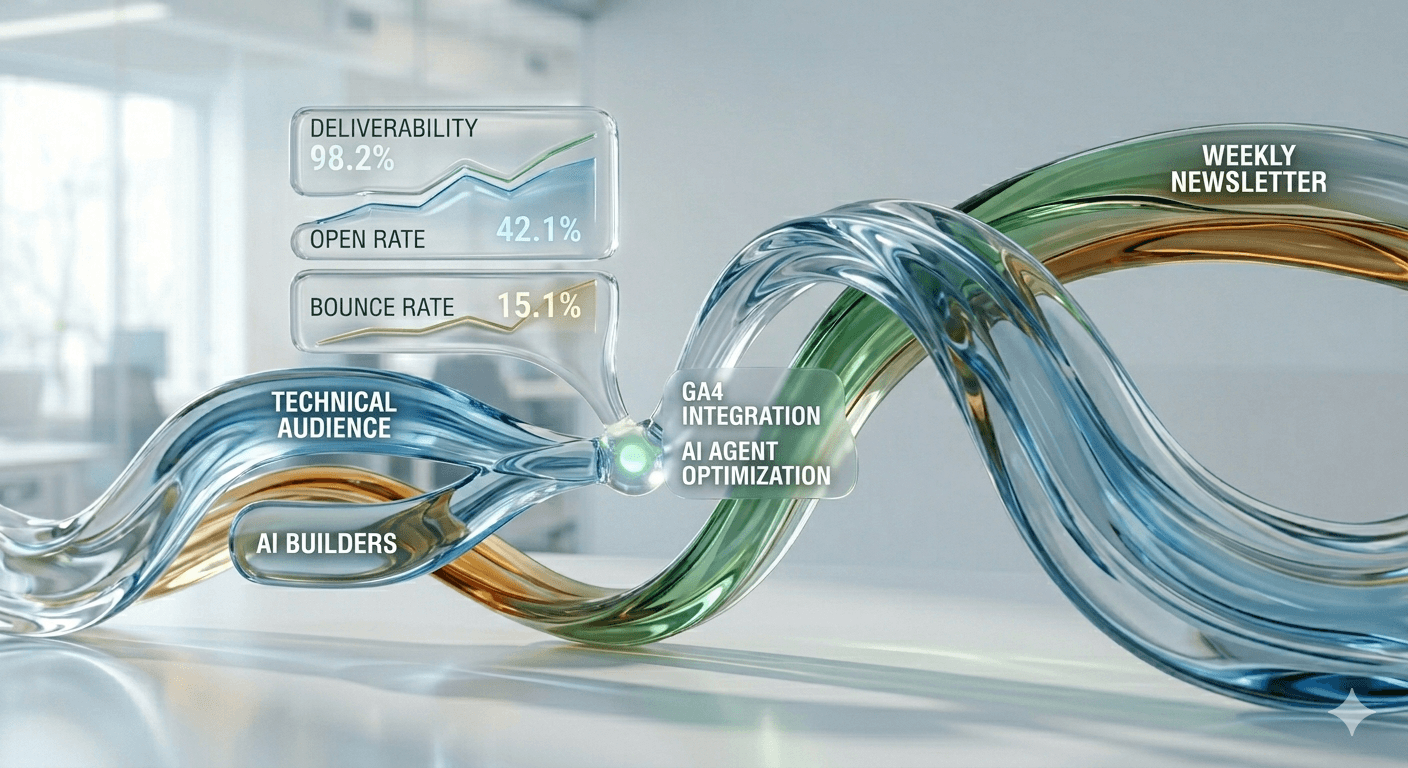
To ensure transparency of the user journey in 2026, a strict regulation for tagging all outbound links is introduced. This allows analytical systems (such as GA4) to correctly interpret the newsletter’s contribution to overall engagement metrics:
Summary
Building a newsletter system based on native tools and AI technologies allows media projects to automate routine processes while focusing on creating valuable content. The presence of documented processes and monitoring tools transforms the newsletter into a predictable loyalty development channel, where every interaction with the reader is based on data and technological precision.
FAQ: Answers to Key Questions About Newsletter Strategy
- How do you determine the optimal newsletter frequency at the start?
The choice of cadence depends on the editorial team’s resources and the volume of generated content. In the 2026 industry, the accepted practice is to begin with a weekly format for deep materials and gradually introduce daily digests as audience engagement data accumulates. The main guideline is consistency: it is better to maintain a rhythm of “once a week” than to allow irregular deliveries.
2. What is the role of AI agents if content is written by humans?
AI agents do not replace authors, but act as a “smart dispatcher.” They analyze subscriber behavior (email open time, clicks on specific tags, reading depth) and, based on this, adapt delivery timing or the order of emails in automated sequences. This makes human-created content more accessible and timely for each individual reader.
3. How does segmentation affect technical metrics (Deliverability)?
Precise segmentation directly contributes to improving sender reputation. When emails are opened and fully read (which happens more often when content matches segment interests), email providers classify the content as useful. This ensures stable deliverability and minimizes the likelihood of попадания into technical filters.
4. Should different templates be used for different segments?
Using a unified modular grid is preferable for brand recognition. However, the content inside these modules can and should vary. For segments preferring quick browsing, emphasis is placed on concise theses, while expert groups receive detailed text blocks and attached materials.
5. Which metrics, besides Open Rate, are most important in 2026?
Modern analytics focuses on engagement depth metrics:
Click-to-Open Rate (CTOR): The ratio of clicks to opens, showing the relevance of the content inside the email.
Reading Time: The time a user spends studying material after transitioning from the newsletter.
Conversion to Community: The percentage of subscribers who move toward more active forms of participation (event registrations, survey participation, transition to paid support models).
6. How can newsletters be integrated with AI search and SEO?
Native newsletter tools integrated into a hybrid CMS allow search crawlers and AI systems to index web versions of emails. The use of proper semantic markup and maintaining high Core Web Vitals metrics for these pages ensures additional content visibility in global search.