
How can modern media turn one-time visits into a постоянная reading habit? In an era dominated by social media algorithms and AI search, the line between “empty” traffic and a loyal audience is becoming a matter of survival for newsrooms. In this article, we will break down a strategy for building audience relationships: from the first click to the formation of a community of fans. Learn how to design the reader’s path (user journey), implement content consumption habits, and use hybrid CMSs to automate loyalty without inflating the development staff.
Audience and traffic in the era of AI search: a shift in emphasis
The development of AI-based search systems (such as SearchGPT or Gemini) is changing the familiar mechanics of how a reader interacts with content. Today we are increasingly encountering the phenomenon of “zero clicks,” when the user receives a brief answer directly on the search results page.
For newsrooms, this is not a reason for alarm, but a signal to rethink how we measure the success of a project. In this new environment, the boundary between “incoming traffic” and a “loyal audience” becomes more pronounced, and understanding this difference helps allocate resources more effectively.
Traffic as an entry point, Audience as a sustainable foundation
In the modern ecosystem, these two concepts complement each other, but solve different tasks:
Traffic is reach and acquaintance. These are people who find your materials through search or recommendations. Traffic is important for brand awareness, but it is often fragmented. A visitor may come for a specific fact and leave without remembering the name of the publication. In the era of AI answers, the volume of such “reference” traffic may decrease, since simple facts are easier to get from a chatbot.
A loyal audience is a conscious choice. These are readers who come to you not only for information, but also for context, expertise, and your unique style of presentation. They value the added value that your newsroom creates. Such an audience is less sensitive to algorithm changes because it looks specifically for your brand in bookmarks, apps, or newsletters.
Creating value in the new context
The main task of a newsroom today is to find a balance. Chasing only search queries that are easily duplicated by artificial intelligence is becoming a less effective strategy.
The key to long-term success is systematic work on return visits. If your content provides a deep understanding of a topic or a unique point of view that is difficult to compress into a short AI answer, you create a reason for the user to come back specifically to you. It is precisely the cultivation of this direct connection with the reader that allows media to remain a relevant and economically sustainable project.
The evolution of loyalty: from a random click to a conscious choice
In 2026, when AI agents and next-generation search engines are able to instantly synthesize an answer to any query without bringing the reader to your site, the difference between “traffic” and “audience” becomes fundamental. We have entered the era of “zero clicks,” where informational noise is filtered by algorithms before the user even sees a link to the source. In this environment, the strategy of chasing mass reach is gradually giving way to work on the quality of connections. Traffic remains an important entry point and a tool of awareness, but it is fragmented by nature — a visitor may get the needed fact and leave without remembering the brand. By contrast, a loyal audience is people who come to you for expertise, a unique angle of view, and the context that cannot be compressed into a short AI answer.
The building of such relationships begins not with technical settings, but with a clear understanding of exactly who the newsroom exists for. Loyalty is not born from “content in general” — it arises where a publication solves a specific problem for its reader, whether that is help navigating urban issues, professional market analysis, or news verification in times of crisis. When the mission of the newsroom becomes a working filter that helps the team choose topics and place emphasis every day, the publication acquires a recognizable face. In a world of excessive information, it is precisely the ability to narrow the focus and offer “added value” that an algorithm cannot reproduce that turns a random passerby into a regular reader. Ultimately, the key to the sustainability of modern media becomes not the number of views, but the return rate — that “quiet moment” when the user consciously chooses your resource among many alternatives.
Designing the path: from the first introduction to the formation of a habit
The process of turning a random visitor into a loyal reader is rarely linear, but it can be represented as a sequence of conscious steps. At the first stage, when a user arrives at the site from a social network or a search result, they feel no attachment to the publication. At this critical moment, the main factors are not the depth of analysis, but the cleanliness of the user experience: page loading speed, the absence of aggressive barriers, and the visual clarity of the brand. The goal of the first visit is not to “sell” a subscription, but to leave a pleasant aftertaste and offer one easy action that will connect the reader with the newsroom in the future. This could be a subscription to a thematic newsletter or simply a recommendation of another high-quality material that develops the topic further. It is important to remember that in 2026 an excess of pop-ups and intrusive calls to action is more likely to repel the user than help conversion.
Real audience building begins with the second or third visit. This is the moment when the reader already recognizes your style and is ready for slightly deeper engagement. This is exactly where personalization and contextual offering tools come into play. A modern hybrid platform allows a newsroom not simply to “show articles,” but to offer the reader value depending on their interests: for example, invite them to a private chat on a specific topic or offer to save an important longread in a personal account. At this stage, it is important not only to provide information, but also to communicate the values of the publication, explaining why your work matters and how it is funded. This is how an emotional connection is formed, which gradually grows into a habit — when visiting your resource becomes part of a daily ritual, rather than the result of a random click on a link.
Ultimately, the long-term success of media depends on how seamless this transition from anonymous consumption to conscious participation is. When a reader begins to perceive your publication as a reliable guide in a complex world, they cease to be part of “traffic” and become part of a community. For the newsroom, this means a transition to a more sustainable economic model, where revenue comes not from random ad impressions, but from loyal users ready to support the project with their time, attention, and resources.
Metrics that matter: how to measure success in the new reality
When strategy shifts from chasing reach to building relationships, traditional reports on the number of pageviews cease to reflect the real state of affairs. For modern media, it is much more important to understand the dynamics of return visits and the depth of engagement. Instead of focusing on the day’s “hits,” which bring one-time spikes of anonymous traffic, a newsroom should concentrate on retention rate and the share of direct visits. These indicators clearly show whether your resource is becoming a conscious choice for the reader and part of their daily information diet. If a user returns to you three times a week without prompts from search algorithms, this is a more meaningful victory than a million random clicks from recommendation feeds.
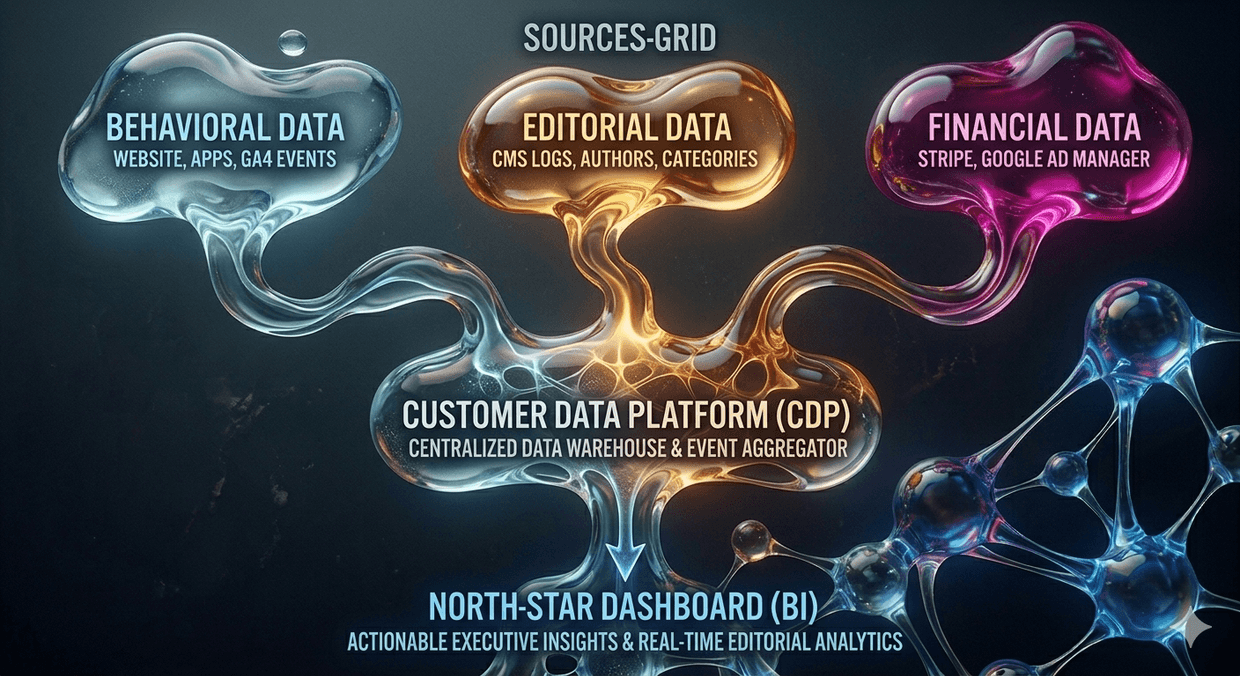
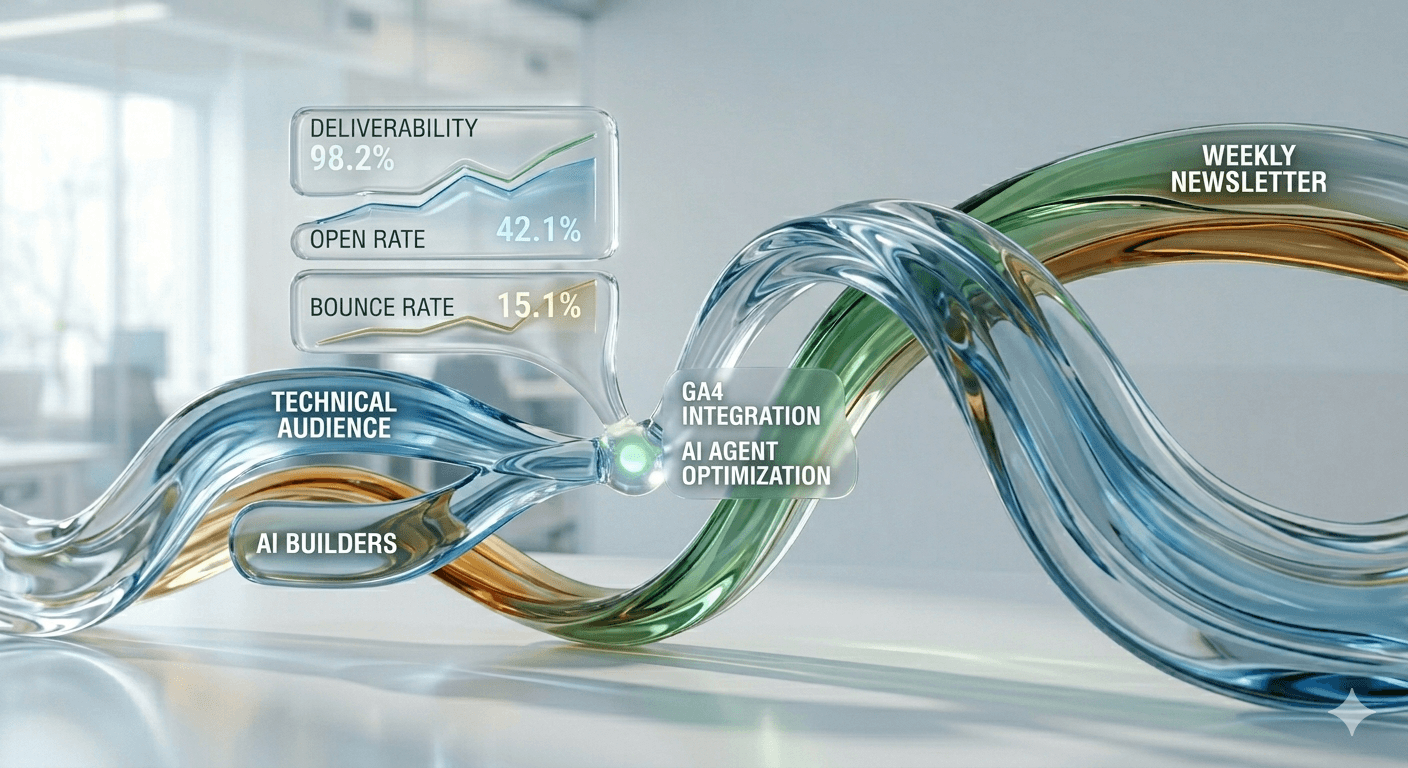
The toolkit for working with the audience in 2026 has also changed: what comes to the forefront is not simply “database collection,” but the creation of chains of light touches (lightweight conversion). These can be automated newsletters on narrow topics, notifications about the continuation of an important investigation, or the ability to save material in a personal account for offline reading. It is important that the technological platform allows the editor to see not only “what they read,” but also “how they read”: at which paragraph people lose interest, or which formats make them share a link in private communities and messengers. This approach turns analytics from a dry report into a living editing tool, helping to adjust the presentation of complex topics in time or experiment with new methods of distribution.
Ultimately, creating a culture of light experiments inside the newsroom turns out to be more important than buying the most expensive analytics systems. The ability to quickly test a hypothesis — for example, change headline formats for loyal readers or add a block of contextual recommendations in the middle of an article — allows media to remain flexible. In a world where user attention is distributed among hundreds of sources, those who know how to listen to their audience through data win, while remaining faithful to their professional standards and unique voice.
Final verdict: what does this mean for your business?
Building an audience in 2026 is not magic, but systematic work at the intersection of editorial mission, quality UX, and deep understanding of data. The transition from the “content factory” model to the “trusted guide” model allows media to step out of the exhausting race for algorithms and build an independent, economically sustainable project.
FAQ: Frequently asked questions about transitioning to an audience model
1. If we stop chasing mass traffic, won’t our advertising revenue fall?
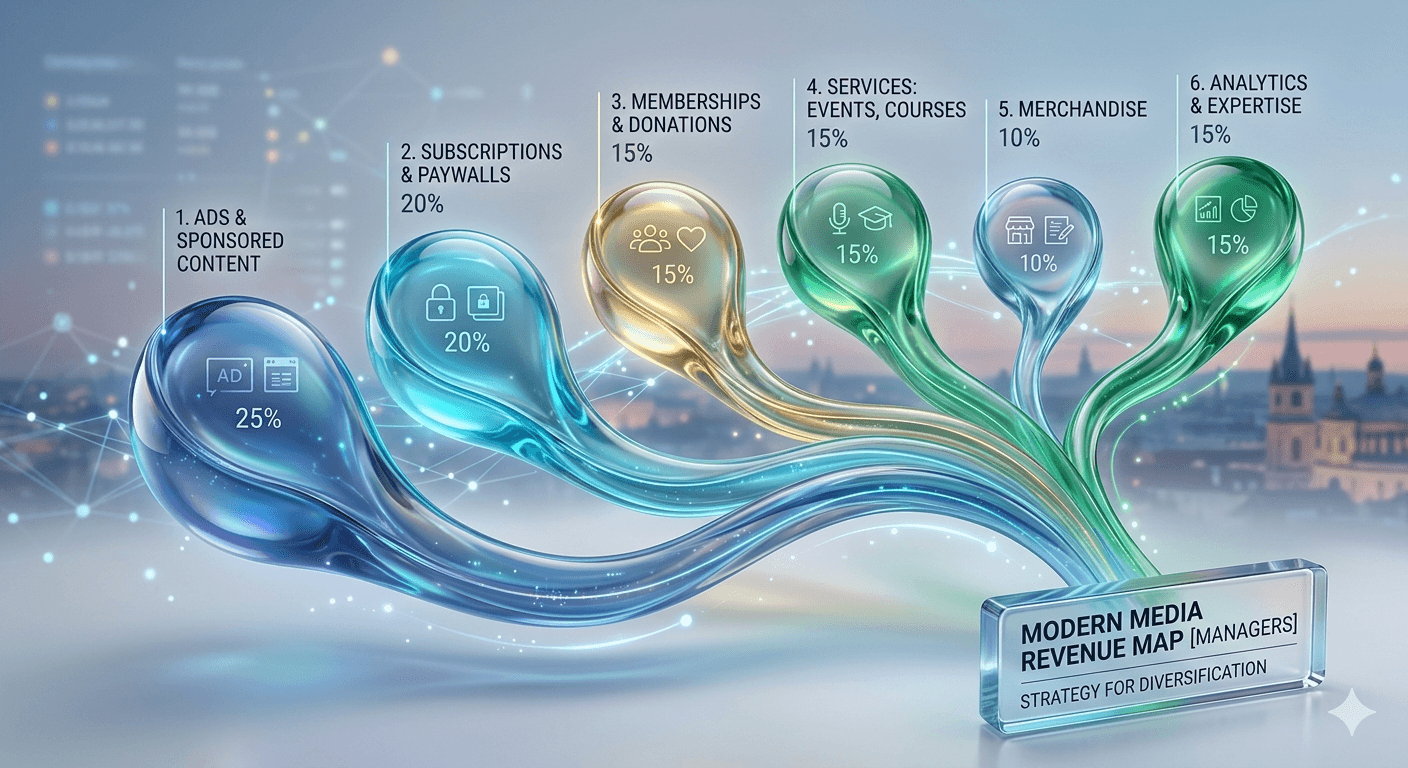
In the short term, you may notice a decline in gross views, but the quality of inventory will increase. Advertisers in 2026 value “random clicks” less and less, and the attention of an engaged, loyal audience more and more. A loyal reader spends more time on the site, views more pages, and has a higher level of trust in the content, including partner materials. In addition, owning your own audience makes it possible to diversify revenue through subscriptions, special projects, and direct sales.
2. How long does it take to turn a “passerby” into a loyal reader?
This is not an instant process. Usually it takes from 3 to 5 quality contacts over the course of a month for a user to develop brand recognition and a habit. That is why “light touches” are so important: a newsletter, a push notification, or a successful social media post that reminds them of you at the right moment.
3. Do we need to hire a separate analyst to track these metrics?
For most mid-sized newsrooms, this is not necessary. The main thing is to configure your analytics system (or use the capabilities of a hybrid CMS) so that it highlights not only the top materials by views, but also the leaders in Retention Rate and Conversion (subscriptions). It is enough for an editor to see 3–4 key indicators once a week to understand whether the project is moving in the right direction.
4. Won’t narrow specialization (niching down) kill our growth potential?
There is a paradox: the more clearly you understand who you work for, the easier it is for you to grow. In an era of information overload, people seek expertise. By becoming “number one” for a narrow but active group (for example, professionals in a certain industry or residents of a specific neighborhood), you create a solid foundation. After that, it is much easier to scale into adjacent niches with a loyal core behind you than to try to capture “the entire internet” at once.
5. How does AI search affect SEO strategy in this approach?
SEO is not dying, it is evolving. Instead of optimizing for “simple questions” that AI will answer, it is worth focusing on optimization for Expertise, Experience, Authoritativeness, and Trustworthiness (E-E-A-T). Search systems of the future will direct users to primary sources and deep analysis. Your task is to make sure that algorithms see you as an authoritative resource to which the reader should be sent for full context.